
THE SHAPE OF A HYPEROBJECT
2025
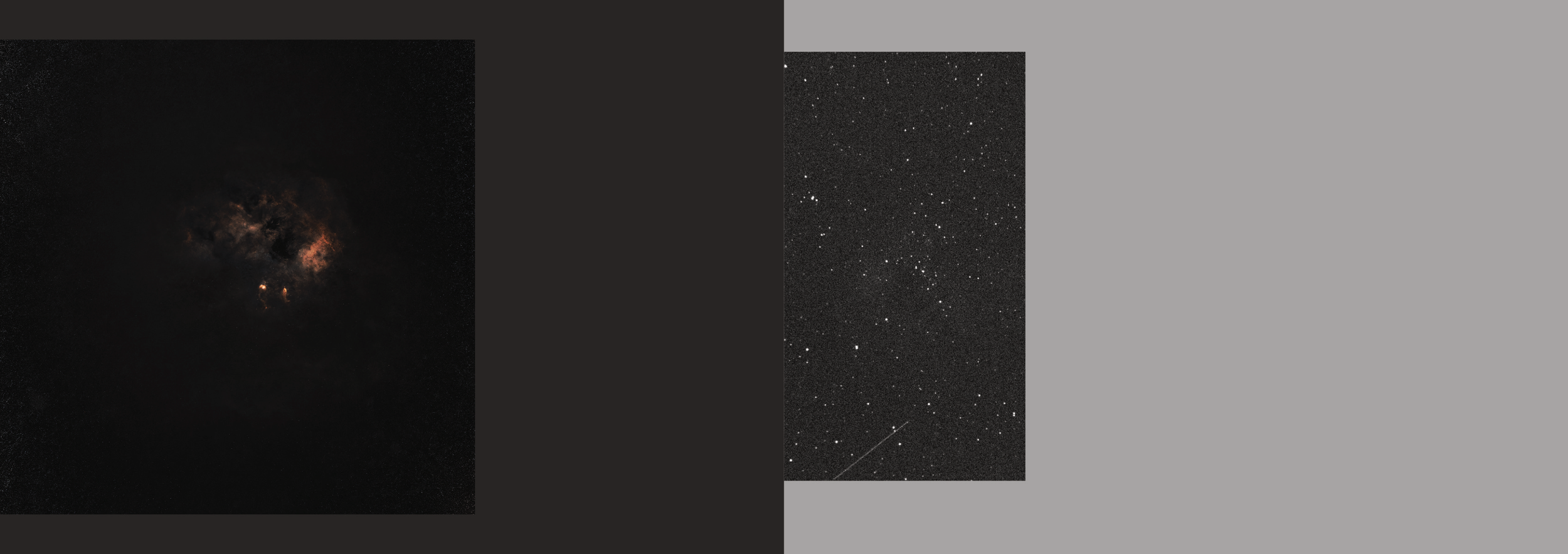
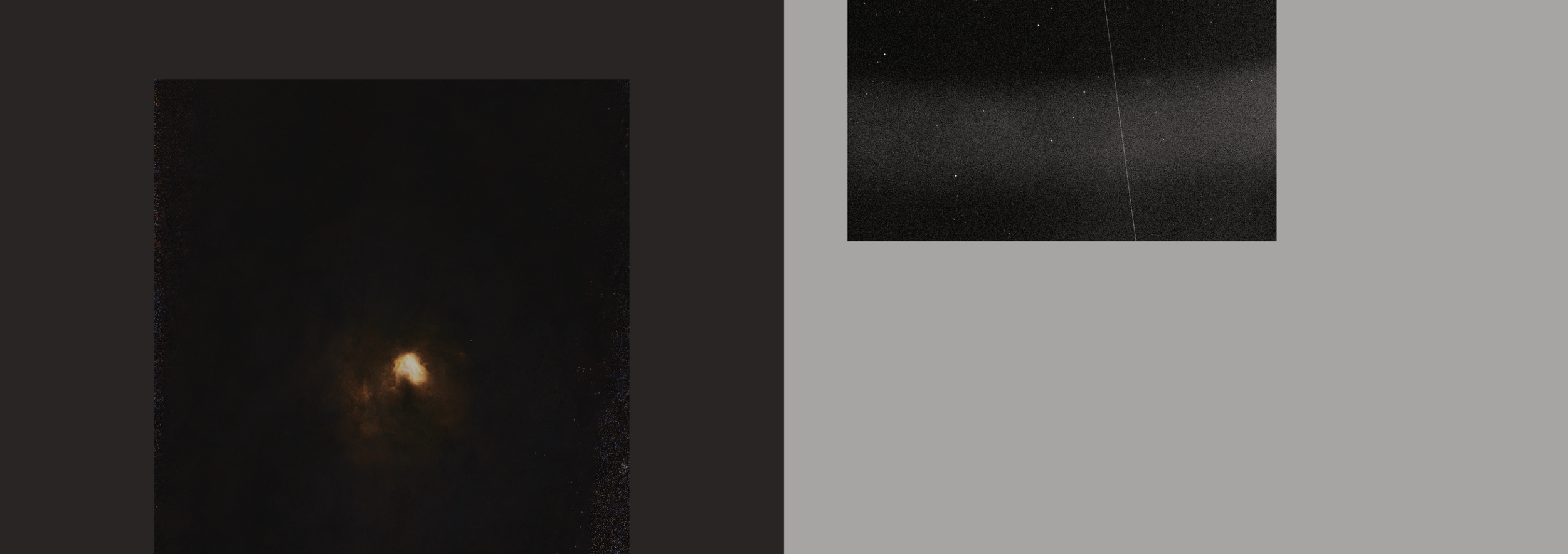
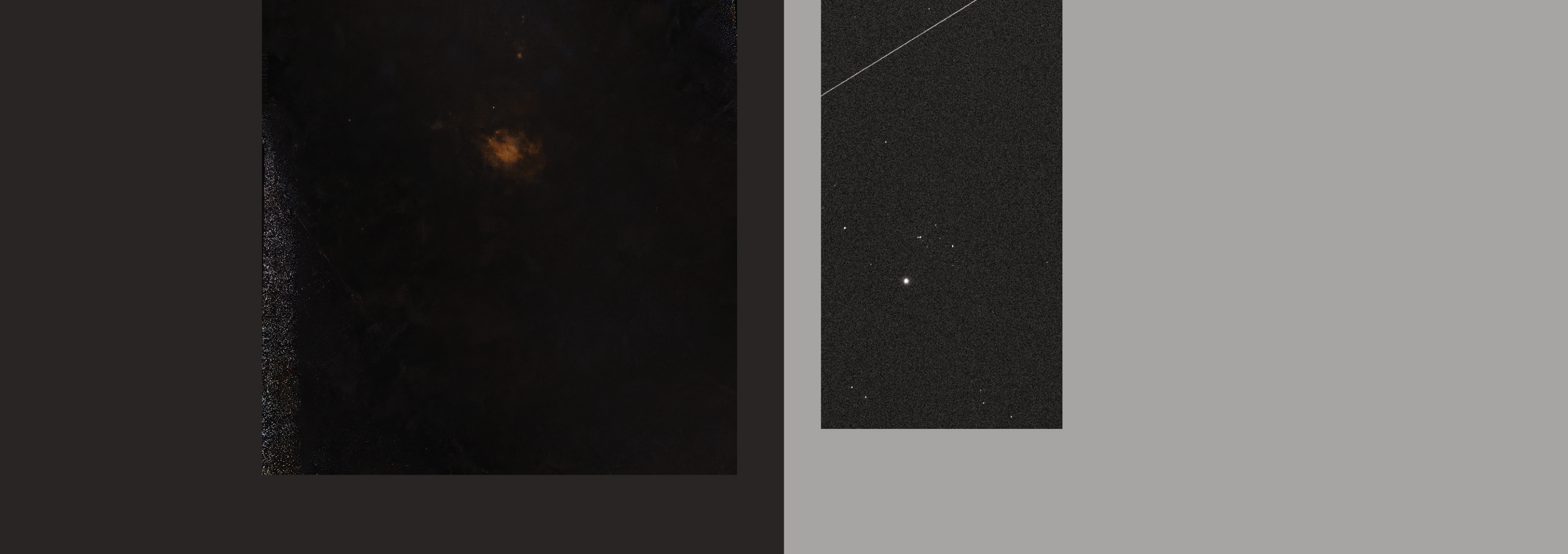
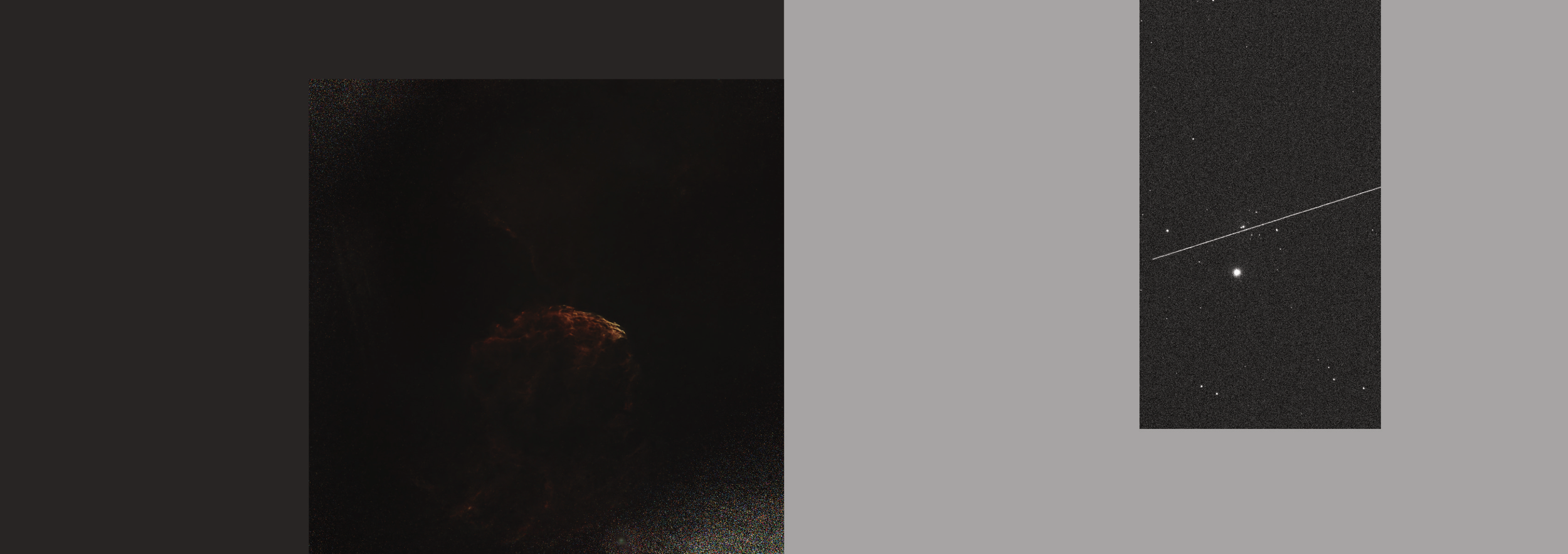
NOTE: Below is a series of spreads from the dummy book I made for this work. The layout and sequencing are important, so I decided to maintain this format here rather than adjust it for the web. Also, the dark background on this page is to try and help the details of our dark sky stand out without having to fight a bright white screen.
STATEMENT OF INTENT
The Shape of a Hyperobject is a response to environmental philosopher Tim Morton's writings on hyperobjects, which he maintains are human-made phenomena/problems of such magnitude that the human mind finds it difficult to grasp not only their size, but also the size of their future impacts.
Examples of such hyperobjects might be the Anthropocene, the climate crisis, and the totality of all nuclear waste in the world and the sheer length of time it will remain unsafe. These are all examples of things that have proven and are proving to be too big to see and think about. We can only see them when their extents poke into our sphere of existence, with extreme weather events for example.
Morton's argument is that by conceiving of these as hyperobjects, we give a name to them and we can think about them. And in thinking about them, we are obliged to do something about them.
The intent of this work, then, is to help us think about another one: the space junk crisis. With millions of objects in low earth orbit as you read this, travelling at up to 18,000 miles per hour, the risk of devastating collision at some point in the future increases with every launch.
The worst-case scenario, Kessler Syndrome — an uncontrollable chain reaction of collisions — could leave us permanently unable to access space, knock out vital GPS services, and create an international political crisis were a global power's satellite to be taken out without warning.
Yet it is so vast, so fast, and so far away that it's very difficult to grasp the enormity of the problem.
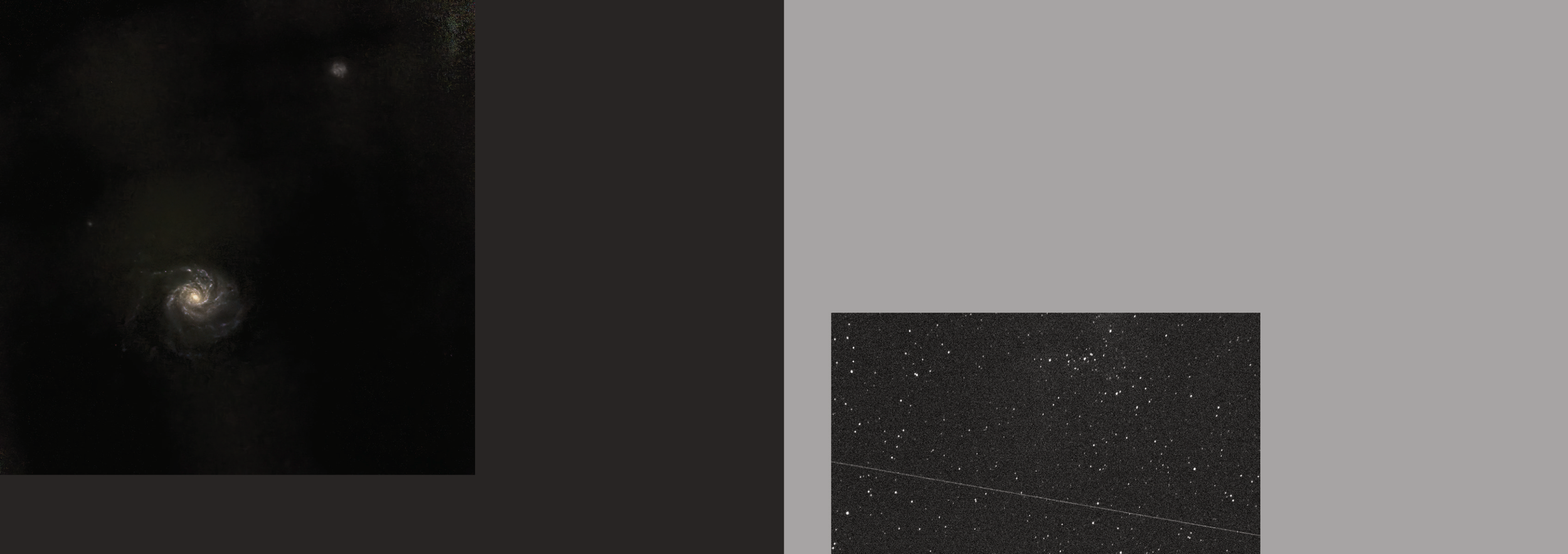
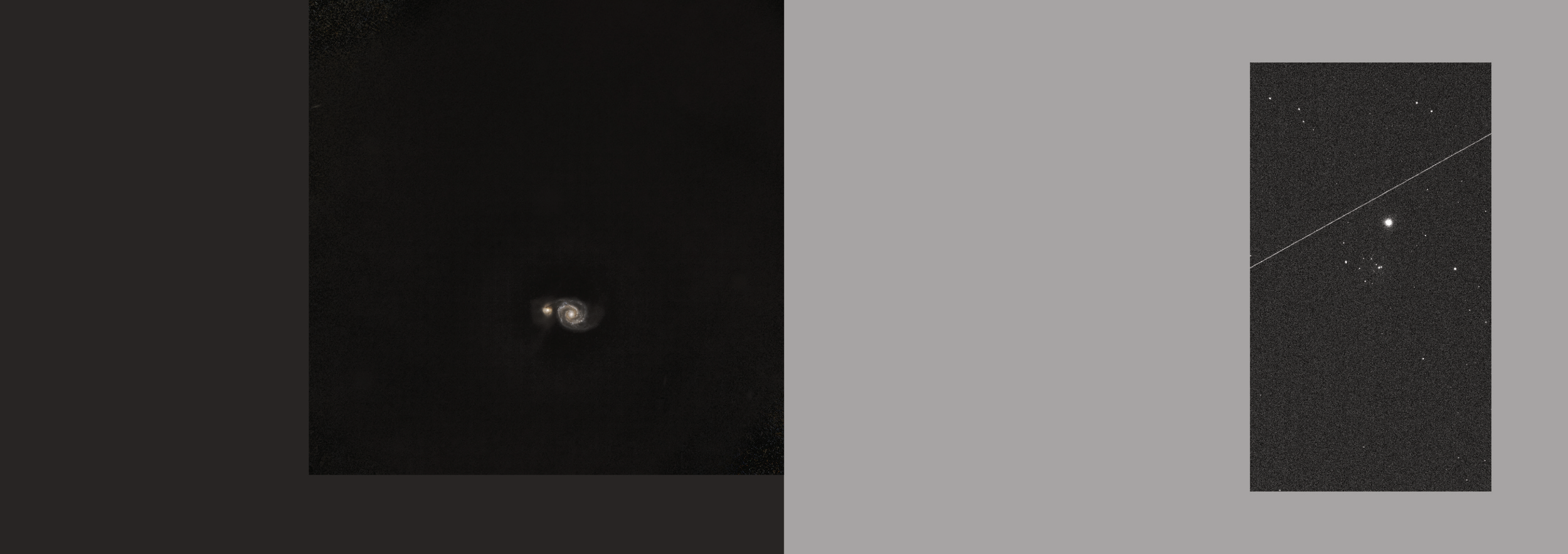
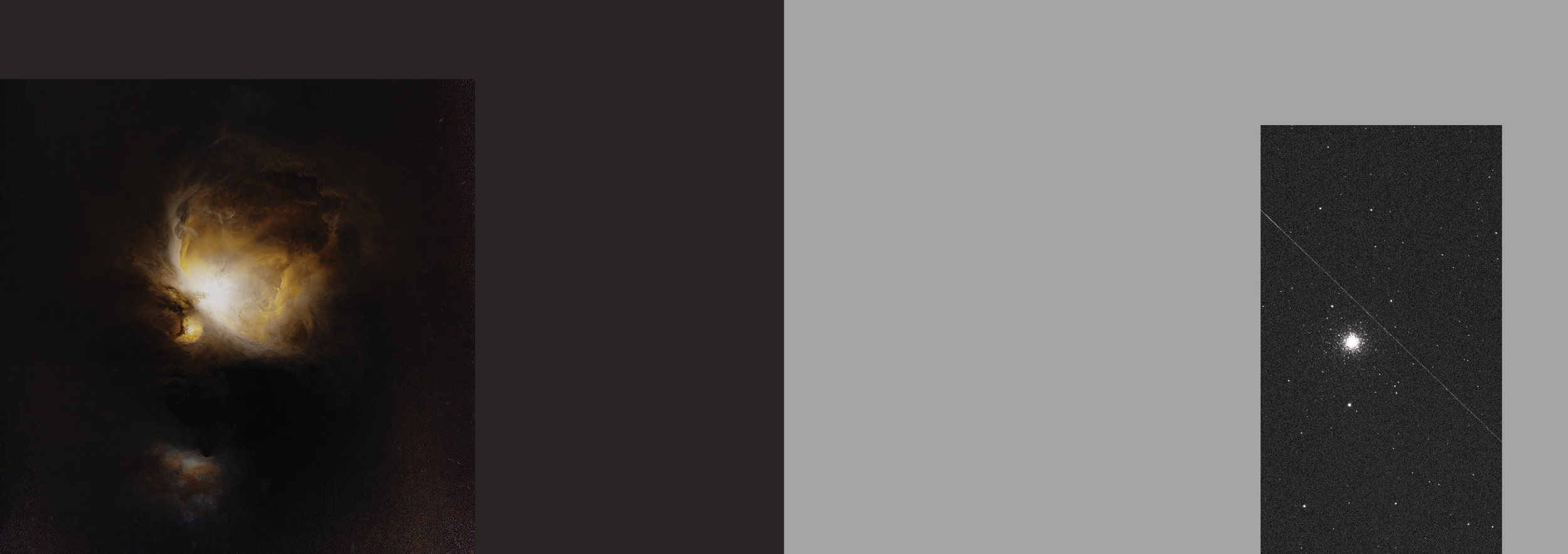
By juxtaposing images of our sublime deep-sky objects — nebulae, galaxies and so on — with cold, noisy images of the traces of satellites hurtling through the frame, I hope to show the shape of this particular hyperobject and provide a means to think about it, and therefore oblige us to do something about it and hyperobjects in general.